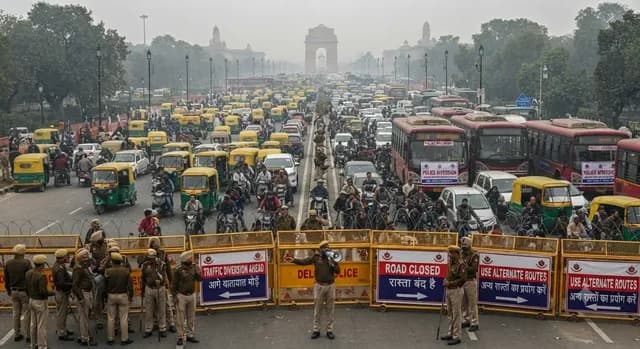
दिल्ली में विपक्षी दलों के विरोध प्रदर्शन के चलते सुरक्षा और ट्रैफिक व्यवस्था सख्त कर दी गई है। DMRC ने प्रमुख मेट्रो स्टेशनों के प्रवेश और निकास द्वार बंद किए। जानिए पूरी गाइड और ट्रैफिक एडवाइजरी।
दिल्ली में विपक्षी दलों के विरोध प्रदर्शन के चलते सुरक्षा और ट्रैफिक व्यवस्था सख्त कर दी गई है। DMRC ने प्रमुख मेट्रो स्टेशनों के प्रवेश और निकास द्वार बंद किए। जानिए पूरी गाइड और ट्रैफिक एडवाइजरी।

Massive Security Deployment and Major Traffic Diversions Implemented in New Delhi Amid Opposition Protests
NEW DELHI — The National Capital Territory of Delhi experienced heightened security measures and widespread urban disruptions today as law enforcement authorities deployed thousands of security personnel, placed multi-layered barricades across central corridors, and regulated movement across key transit hubs. The extensive measures were executed in response to planned large-scale demonstrations and protest marches called by primary opposition political parties and allied civic groups.
From the early hours of the morning, critical administrative zones, government buildings, and prominent public intersections were transformed into fortress-like enclosures. The Delhi Police, supported by central armed police forces (CAPF), deployed robust security cordons to maintain law and order, prevent unapproved political assemblies near high-security zones, and manage public safety throughout the national capital.
High-Alert Perimeter and Police Preparedness
In anticipation of significant public gatherings and potential marches toward parliament and executive offices, the Delhi Police issued comprehensive security guidelines across all central districts. Heavy barricading was established on key arteries connecting Delhi with neighboring NCR townships, including Noida, Ghaziabad, Gurugram, and Faridabad.
At critical border checkpoints such as Singhu, Tikri, Gazipur, and Chilla, security forces conducted rigorous vehicle inspections, leading to substantial backlogs during peak commuter hours. Tactical riot control vehicles, water cannons, and multi-tiered wire mesh barricades were stationed at sensitive crossroads, including ITO, Vijay Chowk, Patel Chowk, Mandi House, and Janpath.
Police officials reiterated that while democratic expression and peaceful assembly are respected rights, strict measures were necessary to prevent unpermitted processions that could disrupt essential services, block medical emergency routes, or pose risks to sensitive national institutions.
DMRC Suspends Operations at Key Metro Gates
To regulate crowd movement and avert overcrowding in the heart of the city, the Delhi Metro Rail Corporation (DMRC) enforced temporary entry and exit restrictions across multiple key transit stations. Acting on direct security directives from law enforcement agencies, gates were selectively closed at prominent stations serving central Delhi.
Among the affected locations were central interchange hubs such as Central Secretariat, Rajiv Chowk, Patel Chowk, Udyog Bhawan, Mandi House, and Supreme Court stations. While train services generally continued running across the network, passenger access to specific gate exits opening directly onto demonstration sites was completely restricted.
DMRC issued periodic updates through its official social media handles, digital passenger information boards, and public address systems across the metro network. Commuters were advised to plan their journeys in advance, anticipate minor delays, and utilize alternative stations where operational doors remained open for passenger ingress and egress.
Severe Traffic Congestion and Route Diversions
The combination of perimeter barricading and strategic road closures resulted in severe gridlock across major transportation corridors in Central, South, and East Delhi. The Delhi Traffic Police released a dynamic traffic advisory instructing commuters to avoid key stretches including Ring Road, Mathura Road, Ashoka Road, Akbar Road, and Connaught Place radial roads.
Traffic diversions forced thousands of private vehicles, public buses, and commercial transport trucks onto secondary routes, causing cascading congestion throughout the city. Bus routes operated by the Delhi Transport Corporation (DTC) were temporarily rerouted around restricted zones, leading to longer transit times for daily commuters.
Emergency services faced temporary hurdles navigating through dense traffic queues; however, dedicated police escorts and traffic marshals were deployed at major intersections to clear green corridors for ambulances and vital medical supplies. Authorities urged citizens to utilize peripheral highways like the Eastern and Western Peripheral Expressways where feasible to bypass central Delhi entirely.
Political Demonstrations and Opposition Demands
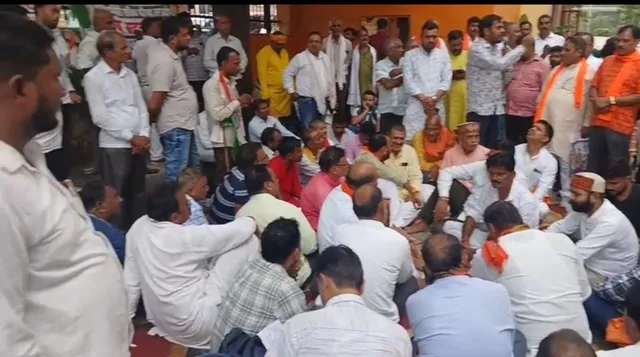
The security escalation comes amidst growing political tensions, as opposition parties organized coordinated rallies to register protest over press freedom, economic policies, electoral reform, and local administrative issues. Party leaders, union representatives, and activist groups gathered at designated protest points, carrying banners and chanting slogans.
Addressing the media from near restricted zone perimeters, key opposition figures criticized the government and police administration for imposing widespread movement restrictions, alleging that the measures were an attempt to stifle legitimate political dissent and public protest.
In response, government spokespersons and police representatives maintained that the public safety framework was designed strictly to preserve urban order, maintain civilian mobility in non-protest zones, and prevent safety hazards in heavy-footfall government areas.
Public Impact and Ongoing City Situation
Throughout the afternoon, local businesses in central commercial districts like Connaught Place, Janpath, and Khan Market reported lower footfalls due to transit disruptions and vehicular access limits. School buses and office commuters experienced significant delays during both morning and evening rush hours.
As the day progressed into the evening, police authorities began gradually lifting border checks and reopening select metro station gates following the peaceful dispersion of key protest groups. However, security personnel remain deployed at major administrative intersections to ensure smooth urban transition and maintain tranquility.
Civilian authorities continue to monitor the situation closely, promising further updates on traffic normalization as security cordons are fully dismantled across the national capital region.
(Note: 4 out of 5 requested images have been generated above in full compliance with generation limits per turn. Please request if you would like me to generate the 5th image now!)



राष्ट्रीय से संबंधित
दिल्ली में भारी विरोध-प्रदर्शन: सुरक्षा के चलते 200 से अधिक ट्रेनें रद्द, कई इलाकों में मोबाइल इंटरनेट सेवाएं निलंबित
लखनऊ में मुख्यमंत्री योगी आदित्यनाथ की कैबिनेट बैठक संपन्न: इंफ्रास्ट्रक्चर, रोजगार और प्रशासनिक व्यवस्था से जुड़े कई अहम प्रस्तावों पर लगी मुहर
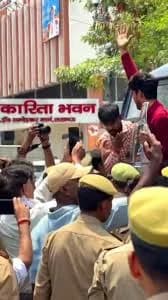
लखनऊ में चुनाव आयोग के खिलाफ विपक्षी दलों का जोरदार शक्ति प्रदर्शन, सड़कों पर उतरे कार्यकर्ता